Your architecture mirrors your organization. To fix your code, you must first fix how your teams collaborate.
#1about 4 minutes
The challenges of scaling a monolithic architecture
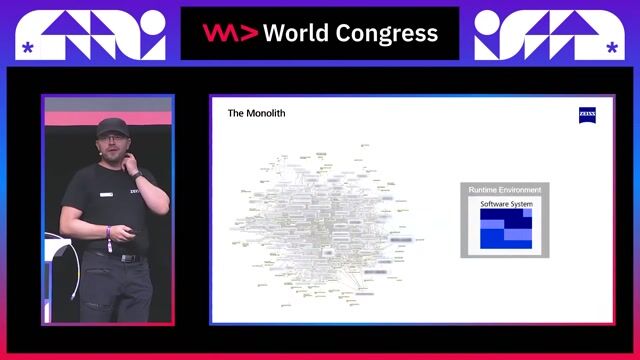
Rapid team growth in a single codebase leads to development friction, increased complexity, and slower delivery times.
#2about 4 minutes
The problems with a growing monolithic codebase
As a monolith grows, development slows down due to the need for extensive communication and alignment across many teams.
#3about 4 minutes
Why strict code ownership is a flawed solution
Assigning strict code ownership creates walled gardens, knowledge silos, and dependencies that hinder collaboration and slow down development.
#4about 4 minutes
How engineering culture shapes system architecture
According to Conway's Law, your organization's communication patterns will ultimately determine your software architecture, making cultural change a prerequisite for technical change.
#5about 4 minutes
Shifting from code ownership to inner sourcing
Move from a mindset of protective ownership to one of collective maintenance by allowing people to go to the work and adopting an inner-sourcing model.
#6about 4 minutes
Scoping change initiatives for maximum impact
Choose meaningful, visible projects that can be completed within a few sprints to ensure they are large enough to matter but small enough to manage risk.
#7about 3 minutes
Applying the scientific method to organizational change
Treat improvements as experiments by forming a clear hypothesis, testing it, analyzing the resulting data, and iterating based on what you learn.
#8about 4 minutes
Practical tips for implementing sustainable changes
Ensure success by making small, iterative changes, prioritizing easy rollbacks, and investing in documentation and code quality to support future work.
#9about 3 minutes
Focusing on modularity over architectural labels
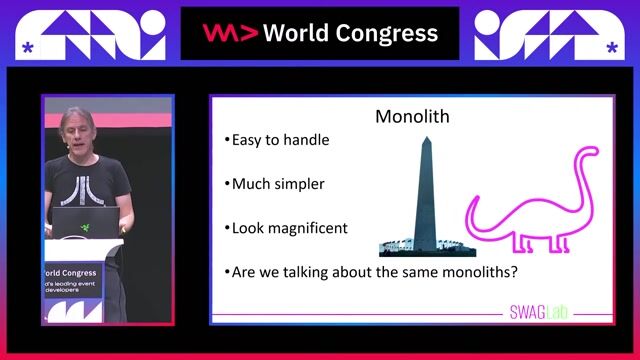
Instead of debating monoliths versus microservices, focus on decoupling code and improving team collaboration to build a more modular and maintainable system.
#10about 3 minutes
Q&A: Documentation, team size, and onboarding
The discussion covers managing documentation through the definition of done, the ideal team size of four to six engineers, and using a buddy system for onboarding.
Related jobs
Jobs that call for the skills explored in this talk.
The Web We Broke (And Why AI Agents Are Paying the Price) - AgentCon BerlinThis is the accompanying post to the talk Chris Heilmann gave at AgentCon in Berlin on 19/05/2026, you can also see the slides and listen to it in this screencast:
Thirty years of developer shortcuts, bloated JavaScript, and inaccessible HTML have l...
Christina Schaireiter
Why Attend a Developer Event?Modern software engineering moves too fast for documentation alone. Attending a world-class event is about shifting from tactical execution to strategic leadership.
Skill Diversification: Break out of your specific tech stack to see how the industry...
Why You Shouldn’t Build a Microservice ArchitectureWelcome to this issue of the WeAreDevelopers Live Talk series. This article recaps an interesting talk by Michael Eisenbart who talks about the pros and cons of microservice architecture.About the speaker:Michael has been working for Bosch as a sof...
From learning to earning
Jobs that call for the skills explored in this talk.












.gif?w=240&auto=compress,format)